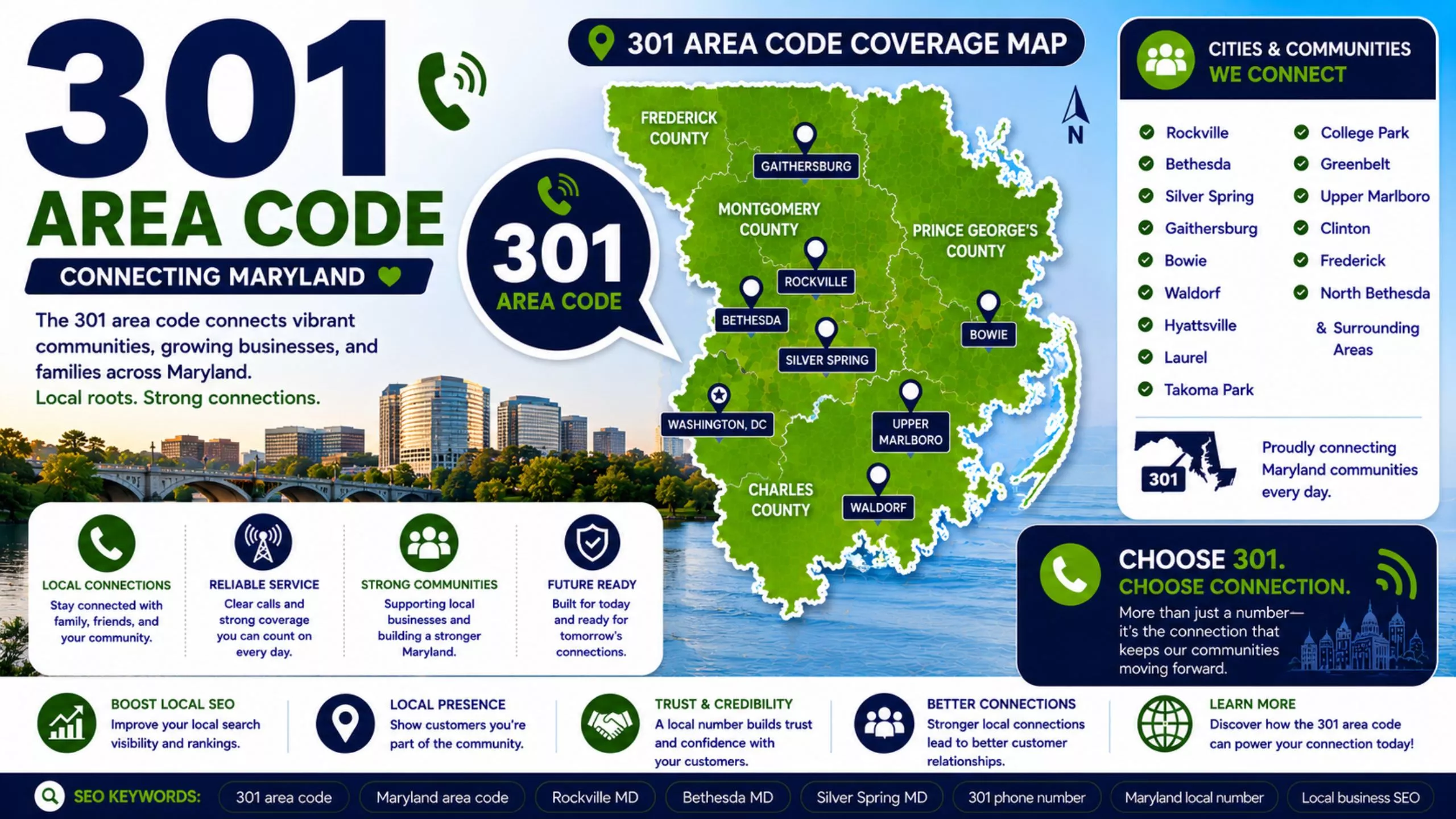
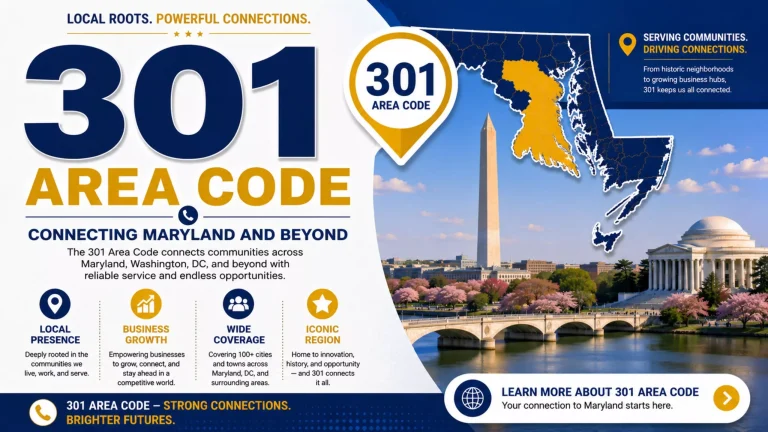
The 301 area code is one of the oldest and most recognizable telephone areas codes in the United States. It serves western and southern Maryland, including major cities such as Bethesda, Rockville, Gaithersburg, Frederick, and Hagerstown. First introduced in 1947, the area code has played an important role in connecting residents, businesses, government offices, and educational institutions throughout the region.
What Is the 301 Area Code?
The area code 301 maryland is one of the oldest telephone codes in the United States. It serves the western and southern parts of Maryland, including many suburbs surrounding Washington, D.C. Since its introduction in 1947, the area code has become a recognizable part of Maryland’s telecommunications system.
Where Is the 301 Area Code Located?
The location of area code 301 covers a large portion of western and southern Maryland. It includes communities near the nation’s capital and stretches west toward the Appalachian Mountains.
Major cities covered
Some of the largest cities and communities served by the area code 301 location include:
History and Origin of the Area Code
Few area codes carry as rich a history as 301. 301 telephone area code was put into service in 1947 and was one of the original 86 areas codes. It originally served the entire state of Maryland. Area code was one of the original North American area codes when the American Telephone and Telegraph Company (AT&T) established a new, nationwide telephone numbering plan in 1947.
Overlay Area Codes: 240 and 227
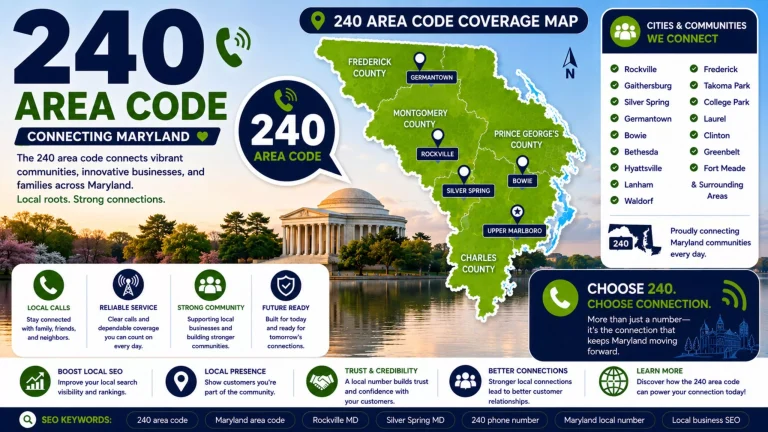
The growth of mobile phones and digital devices in the 1990s created fresh demand for new numbers. Area code 240 was introduced on June 1, 1997, to form the state’s first overlay. Overlays were a new concept at the time, and met with some resistance due to the requirement for ten-digit dialing.
Time Zone
The area code 301 is in the Eastern Time Zone, also known as America/New_York. It means the region observes Eastern Standard Time (EST, UTC−5) during the winter months and Eastern Daylight Time (EDT, UTC−4) during the summer. For businesses and individuals scheduling calls or meetings with contacts in the area code, this is an important detail, particularly for those coordinating from the Central, Mountain, or Pacific time zones across the country.
Demographics and Economy of the Area Code Region
The 301 phone area code covers one of the most prosperous and educated regions in the entire United States. The median household income in the area code is $108,421, with 51.50% of households earning at least $100,000 and 65.49% owning rather than renting their homes. The region also boasts an impressive level of educational attainment, with nearly 25% of residents holding a graduate degree and over 50% holding a bachelor’s degree or higher in a science or engineering field or a related field.
Population Served by the Area Code
Today, 301 telephone numbers serve the communication needs of more than 1.5 million people in Maryland. Combined with its overlays, the area code complex serves a total population of 4,432,059. It makes the 301/240/227 numbering plan area one of the most densely populated and economically significant telephone zones in the Mid-Atlantic region.
How to Dial a Number
Calling a 301 number is straightforward anywhere in the world. To call a 301 number from within the United States, dial 1-301-XXX-XXXX (where XXX-XXXX is the local number). From outside the US, dial your country’s exit code, then +1-301-XXX-XXXX. Because of the overlay system in place, residents and businesses within coverage area must dial all 10 digits, including the area code, even when calling a neighbor just down the street. This ten-digit dialing requirement has been in effect since the introduction of the 240 overlay in 1997.
Frequently Asked Questions (FAQs)
Conclusion
The 301 area code usa remains one of Maryland’s most historic and widely recognized telephone areas codes. Covering thriving suburbs of Washington, D.C., growing business centers, historic communities, and scenic western counties, it plays a vital role in connecting residents and organizations across the state.