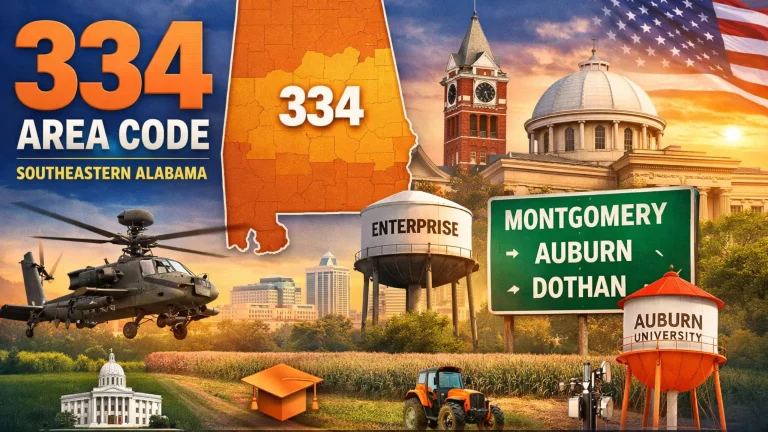
The 334 area code serves southeastern Alabama. Created in 1995 from the 205 split, it includes cities such as Montgomery, Auburn, and Dothan. This makes it key to Alabama’s communications.
Today, the area code 334 serves millions of residents, businesses, and organizations across the region. It supports both landline and mobile phone services, helping people stay connected for personal and professional purposes. As the population continues to grow, the area code remains essential for managing telecommunications in southeastern Alabama.
What is the 334 Area Code?
Area code 334 is a geographic telephone numbering plan area serving central and southeastern Alabama in the United States. It functions under the North American Numbering Plan (NANP) and is the 334 area code alabama most historically and economically significant regions, encompassing the state capital Montgomery, the college city of Auburn, and the regional hub of Dothan, among dozens of other communities.
The code covers approximately 32 counties and over 110 cities, providing telecommunications services to a population exceeding 1.35 million residents. It is operated under the oversight of both the North American Numbering Plan Administrator (NANPA) and the Alabama Public Service Commission (APSC), which manages number allocation and regulatory compliance within the state.
Where Is the 334 Area Code Located?
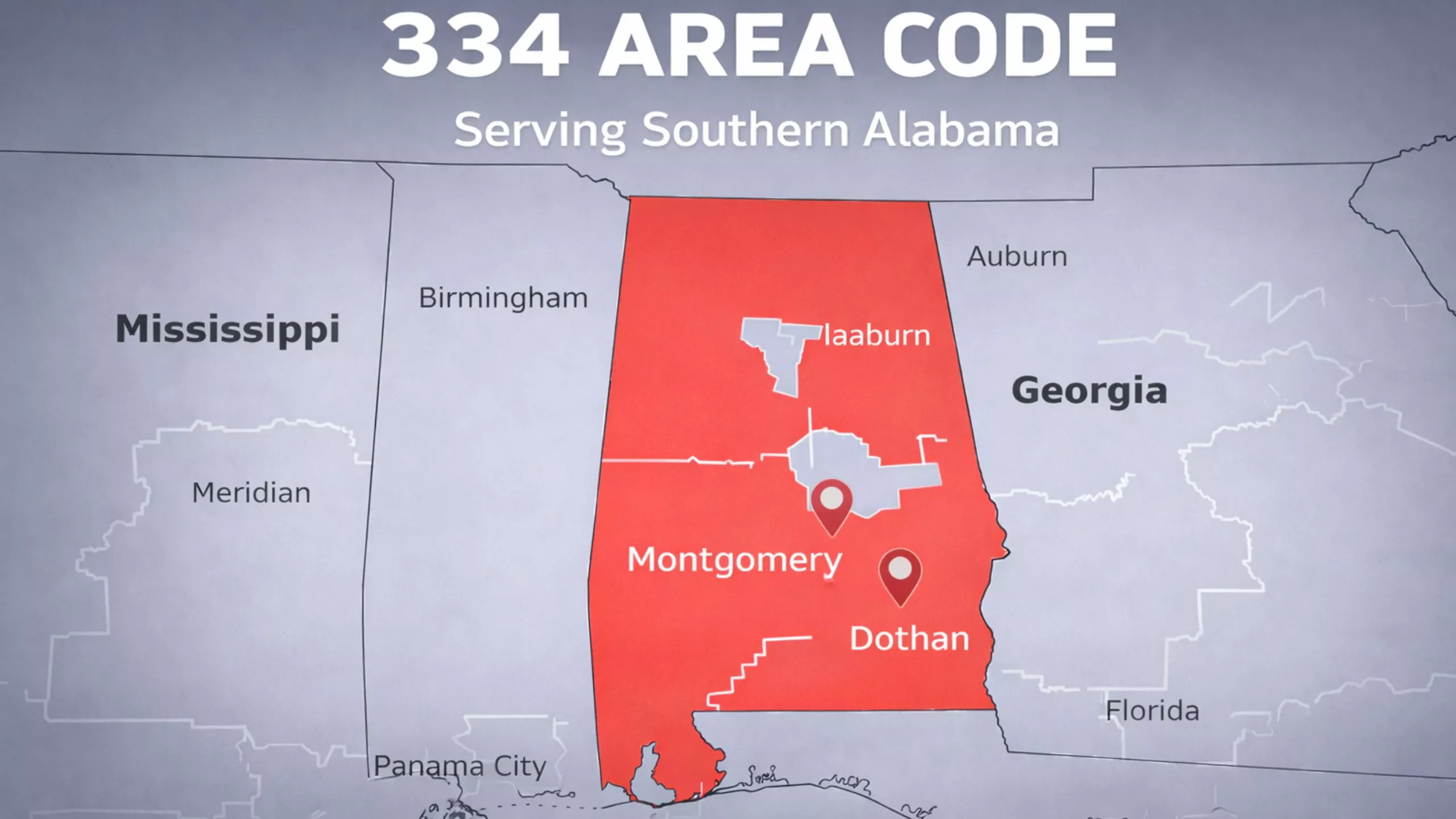
The location of area code 334 in Alabama, USA, covering the southeastern and central portions of the state. It is centered on the Montgomery metropolitan area, Alabama’s state capital, and extends outward to include major communities across the region.
Major Cities in the 334 Area Code
The area code of 334 covers more than 5 counties across northern and northeastern Alabama. The primary counties include:
History of the 334 Area Code
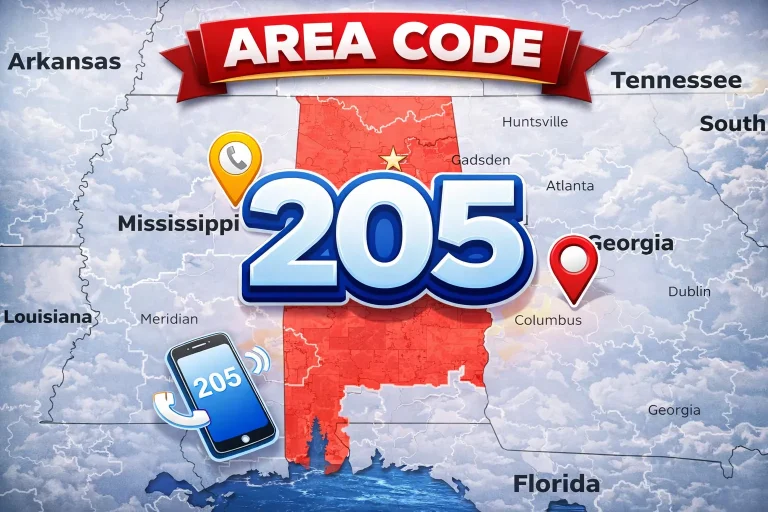
The 334 area code was created in 1995 when it split from the older 205 area code. This change was necessary due to the growing demand for telephone numbers as the population and mobile phone usage increased.
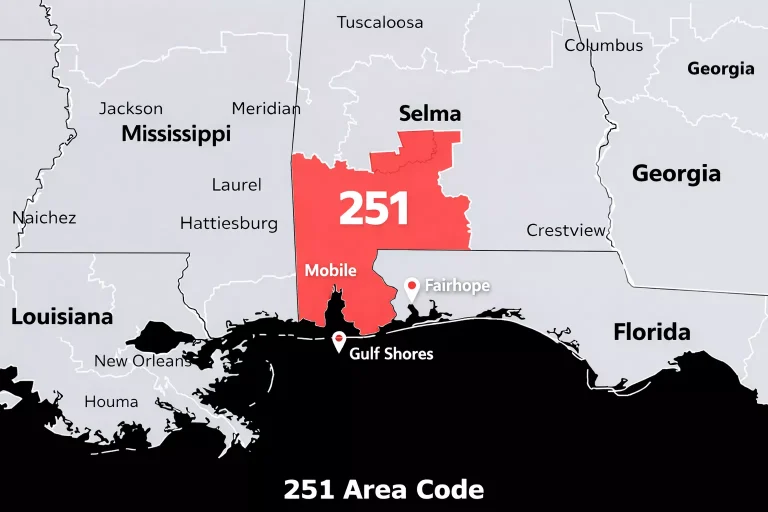
Later, in 2010, part of the region was split again to create the 251 area code, which now serves the southwestern part of Alabama.
Understanding the origin of area code 334 requires a brief look at Alabama’s broader telephone history. The state originally operated under a single area code 205, which covered all of Alabama when AT&T and the Bell System established the North American Numbering Plan (NANP) in 1947. As Alabama’s population grew and telecommunications demand expanded, that single code could no longer accommodate the volume of phone numbers needed.
Notably, area code 334 holds a small piece of telecommunications history: it was the very first interchangeable NPA code (where the middle digit is neither 0 nor 1) to officially go into service, preceding Washington’s area code 360 by just one minute.
334 Area Code Time Zone
The 334 area code operates entirely within the Central Time Zone (CT). This means residents and businesses in the 334 region observe Central Standard Time (CST, UTC−6) during the winter months, and switch to Central Daylight Time (CDT, UTC−5) during daylight saving time in the summer.
If you are calling someone are code 334 from the East Coast, they are one hour behind you. From the West Coast, they are two hours ahead. This is important to keep in mind for business calls, scheduling virtual meetings, or reaching out to customers in the region.
Economy and Industries in the 334 Region
The 334 area code covers one of Alabama’s most economically diverse regions. Montgomery, as the state capital, anchors much of the region’s government, healthcare, and service sectors, while surrounding cities contribute to the local economy through manufacturing, education, agriculture, and military industries.
The Montgomery metropolitan area’s total nominal GDP exceeds $24 billion, driven by a mix of manufacturing output and services. As of early 2025, the region’s unemployment rate is near 3.8%, reflecting a stable, growing labor market that continues to attract new business investment.
How to Call a 334 Number
Dialing a 334 number is straightforward, but depends on where you are calling from.
From within the United States
Dial the full 10-digit number: 1-334-XXX-XXXX. Within the local area code 334 location in usa, because there is currently no overlay requiring 10-digit local dialing, you may still dial just the 7-digit local number. However, with the new 483 overlay in service since February 2026, 10-digit dialing will soon become mandatory for all local calls in the region.
From outside the United States
Dial your country’s international exit code, then the US country code, and the full number: +1-334-XXX-XXXX. For example, from the UK you would dial 00-1-334-XXX-XXXX.
Is 334 a toll-free number?
No. The 334 area code is a standard geographic area code assigned to Alabama. It is not toll-free. Toll-free area codes in the US include 800, 833, 844, 855, 866, 877, and 888. Calls to 334 numbers are billed at standard domestic rates and incur no additional surcharge compared to calls to any other US area code.
334 Area Code Scam Awareness
Like 334 area code usa, 334 numbers can be spoofed by scammers using voice-over-IP (VoIP) technology to make their calls appear local. If you receive an unexpected call from a 334 number that you do not recognize, there are some red flags to watch for:
Common phone scam warning signs
Be cautious if the caller urgently requests personal information such as Social Security numbers, banking details, or passwords. Legitimate government agencies, banks, and businesses will never ask for sensitive information over an unsolicited phone call. Other red flags include threats of legal action, promises of prizes or refunds, or requests for payment via gift cards or wire transfers.
If you suspect a fraudulent call from a 334 number (or any number), you can report it directly to the Federal Trade Commission (FTC) at reportfraud.ftc.gov. You may also add your number to the National Do Not Call Registry to reduce unwanted solicitation calls.
Frequently Asked Question(FAQs)
Conclusion
The 334 are code plays an important role in Alabama’s communication system by serving major cities such as Montgomery, Auburn, and Dothan. Since its creation in 1995, it has supported regional growth and continues to serve millions of residents and businesses across southeastern Alabama.