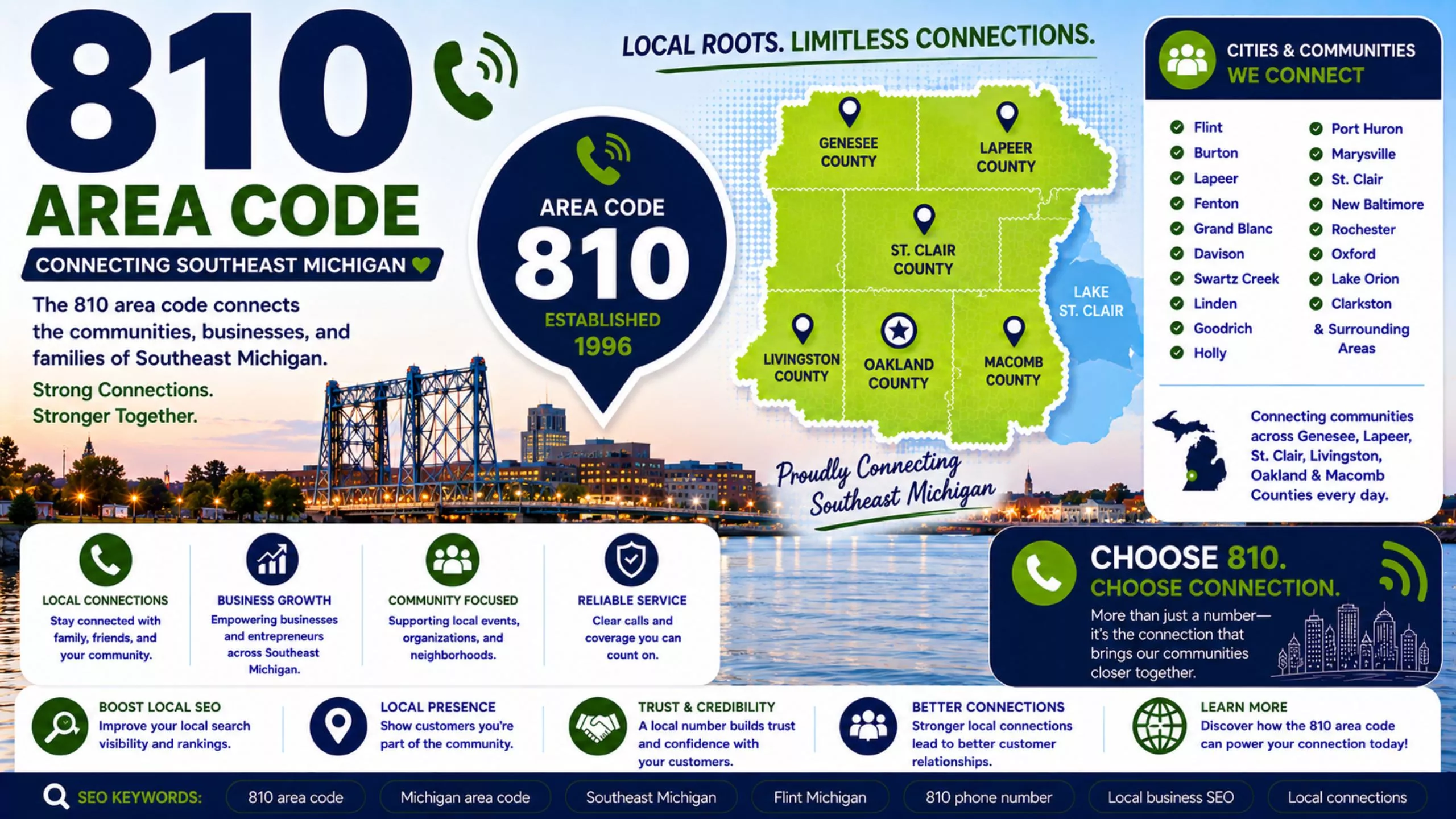
The 810 area code serves east-central Michigan, including Flint, Port Huron, Lapeer, Burton, and the southern Thumb region. Telecommunications authorities introduced the area code on December 1, 1993, to meet the growing demand for new phone numbers. The area code operates entirely in the Eastern Time Zone and remains a single, non-overlay area code. Residents and businesses use only the area code when dialing local phone numbers within the region.
What Is the 810 Area Code?
810 area code mi is a geographic telephone area code in the North American Numbering Plan (NANP), assigned exclusively to east-central Michigan. It’s a standard 10-digit local dialing region, not a toll-free or premium-rate code, and it isn’t linked to any particular scam pattern any more than other area codes are.
| Fact | Detail |
|---|---|
| State | Michigan, USA |
| Region | East-central Michigan / southern Thumb |
| Time zone | Eastern Time (ET) |
| In service since | December 1, 1993 |
| Overlay status | Single code, no overlay |
| Major cities | Flint, Port Huron, Burton, Lapeer |
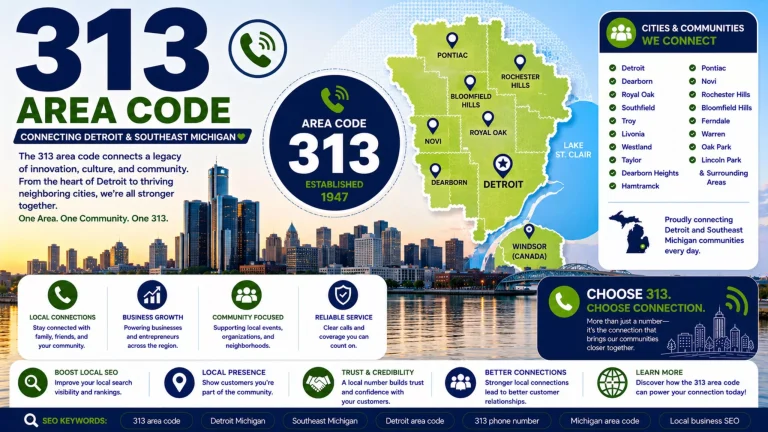
| Split from | Area code 313 |
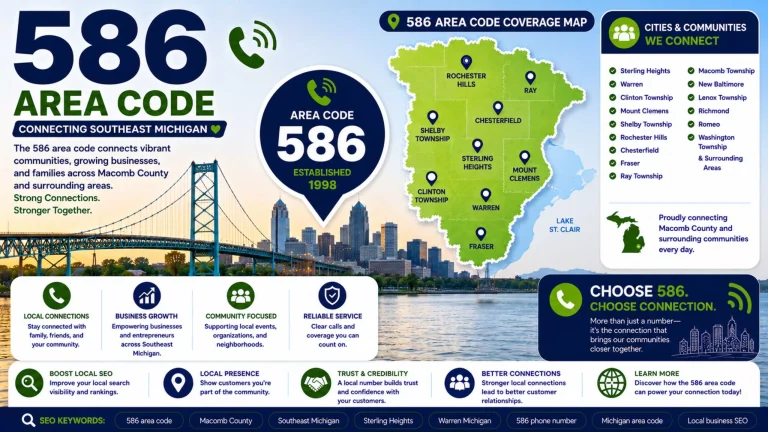
| Later spin-offs | 248 (1997), 586 (2001) |
Where Is the 810 Area Code Located?
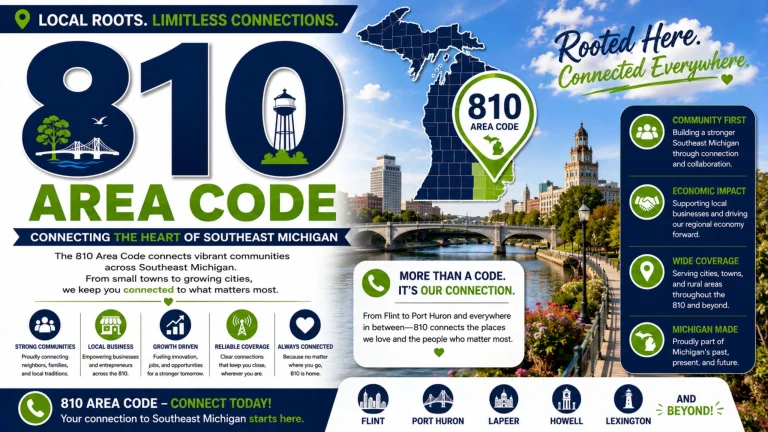
The area code 810 covers a swath of southeastern Michigan anchored by Flint and Port Huron, extending north into Lapeer County and across the southern portion of Michigan’s Thumb. Coverage centers on Flint, Lapeer, Port Huron, and the southern portion of the Thumb.
Cities Covered by Area Code
The most commonly cited cities in the 810 numbering plan area include:
History of the Area Code
Understanding why 810 exists and how it’s shaped helps explain much of the confusion people run into with outdated directory listings.
1993 — Creation. Area code 810 went into service on December 1, 1993, in a mid-eastern section of Michigan, when the numbering plan area 313 in the southeastern part of the state was divided.
1994 — Permissive dialing ends. A transition period allowed callers to dial either 313 or 810 until it ended on August 10, 1994.
Is a Real Area Code? Is It Safe?
Yes. area code of 810 is a legitimate, standard geographic area code, not toll-free, not premium, and not inherently associated with scams. Toll-free codes in the U.S. are limited to 800, 833, 844, 855, 866, 877, and 888; 810 is not among them.
How to Dial an Number
810 vs. Nearby Michigan Area Codes
| Area Code | Primary City |
|---|---|
| 810 | Flint / Port Huron |
| 248 | Troy / Oakland County |
| 313 | Detroit |
| 586 | Warren / Macomb County |
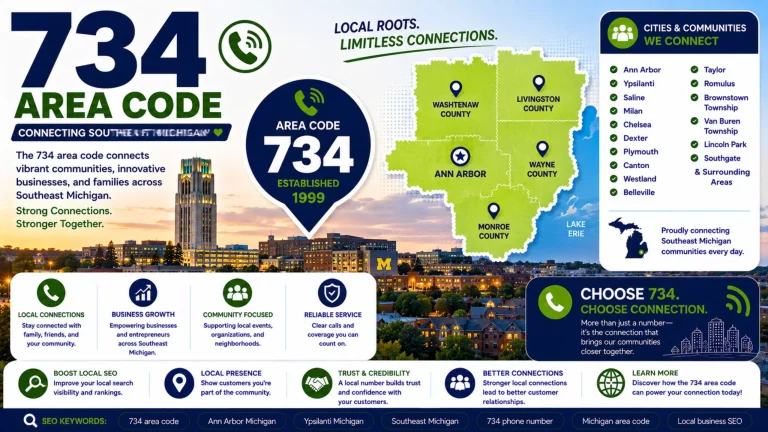
| 734 | Ann Arbor |
| 517 | Lansing |
| 989 | Saginaw |
Frequently Asked Questions (FAQs)
Conclusion
The michigan 810 area code is a stable, single-region telephone code covering Flint, Port Huron, Lapeer, and the surrounding communities of east-central Michigan and the southern Thumb. Created in 1993 from the original 313 (Detroit) numbering plan, it once stretched across a much larger footprint before losing ground to the 248 split in 1997 and the 586 split in 2001, leaving it with the smaller, well-defined territory it serves today.